More Ontario homes and businesses are adding electric vehicle (EV) chargers, heat pumps, and solar panels. Each upgrade needs an electrician to run new circuits, upgrade panels, and connect the equipment safely. For anyone training in the trade, that means more kinds of work to choose from.
The tasks are new, but the jobs rely on the same electrical skills that have always mattered. That’s good news if you’re thinking about training to become an electrician.
In this post, we break down what electricians actually do on EV charger, heat pump, and solar jobs. We also look at why this work is growing in Ontario and how you can get started.
IN THIS POST
- EV Charger Installation: What Electricians Do
- Heat Pump Installation: The Electrician’s Role
- Solar and Battery Storage: Where Electricians Fit In
- Why Clean Energy Work is Growing in Ontario
- How to Get Started in Clean Energy Electrical Work
- FAQs
EV CHARGER INSTALLATION: WHAT ELECTRICIANS DO
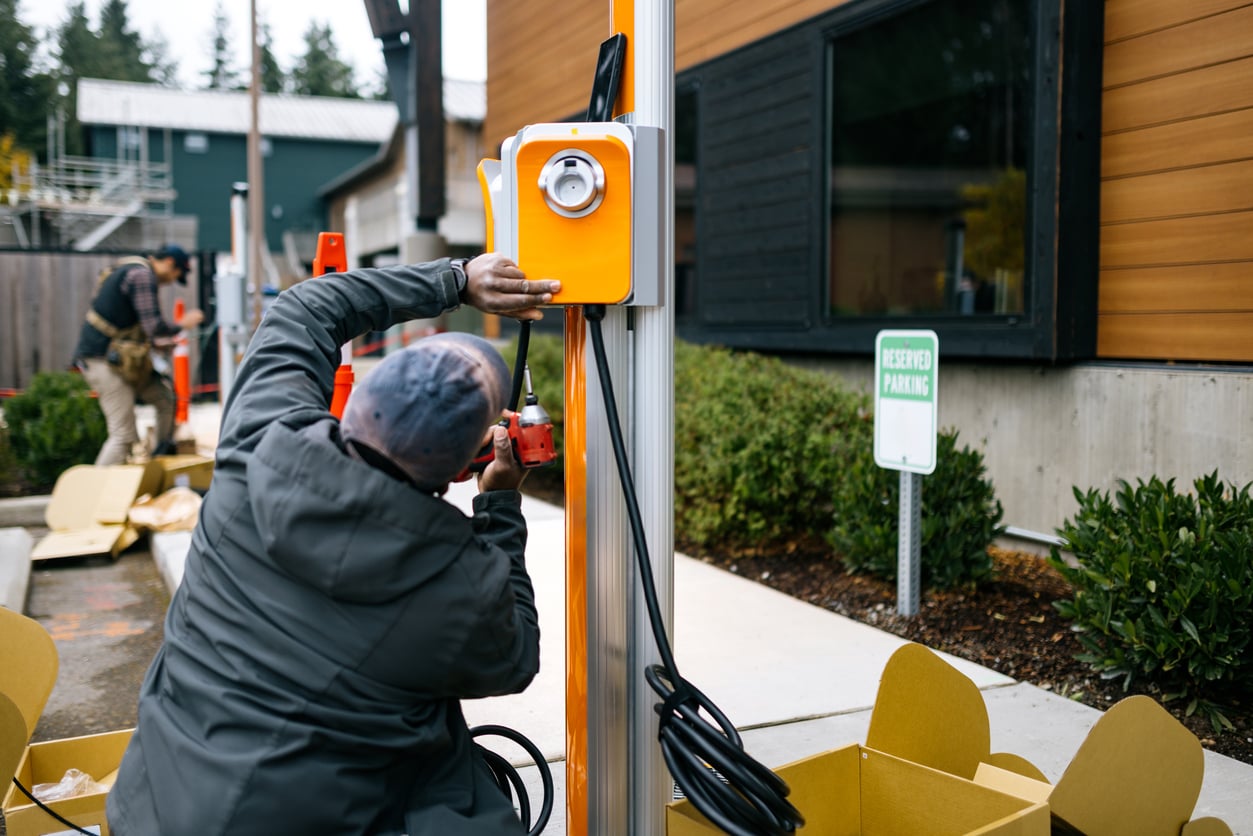
An electrician makes sure the building can safely supply power to the charger. Then they install the circuit and charger according to the electrical code.
Most home chargers (called Level 2 chargers) run on 240 volts, the same as an electric stove or clothes dryer. That’s much more power than a regular wall outlet provides.
On a typical EV charger installation job, an electrician will:
- Check how much capacity is left in the electrical panel
- Install a new circuit just for the charger
- Upgrade the panel or electrical service if the home needs more power
- Mount and connect the charger safely, indoors or outdoors
In Ontario, the Electrical Safety Authority (ESA) requires a notification (permit) for EV charger installations. A licensed electrical contractor files the notification before starting work. Once the work has passed inspection, the ESA issues a Certificate of Acceptance.
In 2023, the ESA ran a safety audit on EV charger installations in Toronto and found more than 400 cases of work done without a permit. They also saw extension cords stretched across sidewalks and chargers mounted on trees. (Note to future electricians: Never do that!)
HEAT PUMP INSTALLATION: THE ELECTRICIAN’S ROLE
Electricians handle the electrical side of a heat pump installation. HVAC technicians handle the heating and cooling equipment itself.
A heat pump keeps a house warm or cool by moving heat from one place to another. It runs on electricity, so it needs a proper power supply.
The electrician’s part of the job usually includes:
- Installing a dedicated circuit for the outdoor unit
- Adding a disconnect switch near the unit, so it can be shut off safely for service
- Checking whether the panel can handle the added load
When a home switches from a gas furnace to an electric heat pump, it may use a lot more electricity. In some homes, that means the panel needs an upgrade too.
Handling refrigerant and setting up the system is HVAC work, which needs separate certification. On many jobs, electricians and HVAC technicians work side by side.
Here’s a quick look at who usually does what on a heat pump job:
|
Task |
Electrician |
HVAC technician |
|
Installing a dedicated circuit and disconnect switch |
✓ |
|
|
Checking or upgrading panel capacity |
✓ |
|
|
Installing the indoor and outdoor units |
|
✓ |
|
Connecting refrigerant lines and charging the system |
|
✓ |
Related: HVAC vs. Electrician: Which Skilled Trade is Better for You?
SOLAR AND BATTERY STORAGE: WHERE ELECTRICIANS FIT IN
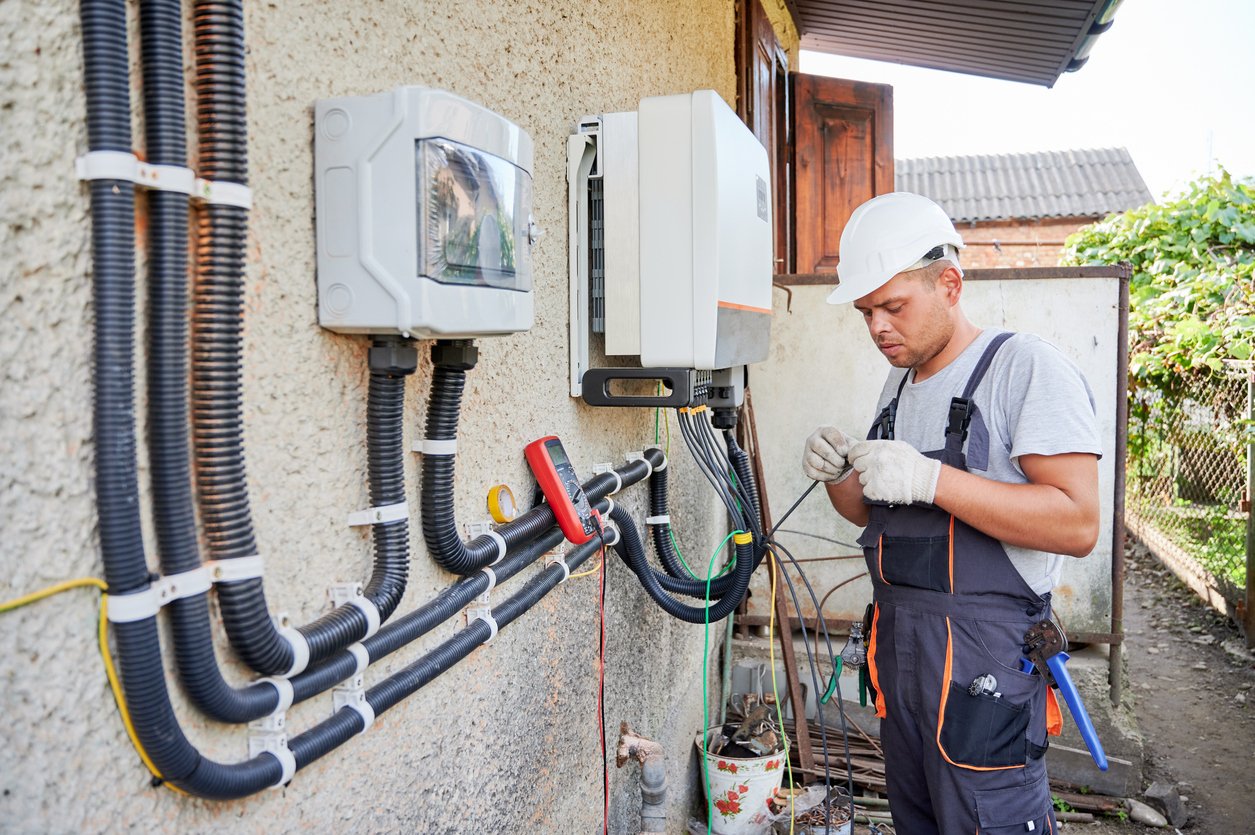
Electricians wire solar panels and batteries into a building’s electrical system, so the power can be used safely.
Solar panels produce direct current (DC), but homes run on alternating current (AC). A device called an inverter converts one to the other.
On a solar job, electricians typically:
- Run wiring from the solar panels to the inverter
- Connect the system to the home’s electrical panel
- Install battery systems that store power for later
- Work with the local utility when the system connects to the power grid
 Electrician installing wiring inverter for solar panel system
WHY CLEAN ENERGY WORK IS GROWING IN ONTARIO
Government rebates for heat pumps and solar, along with rising EV sales, are creating demand for electricians to do this kind of work.
Ontario’s Home Renovation Savings Program offers rebates to homeowners who install energy-saving items like heat pumps and solar panels. And beginning in 2027, the federal government will offer rebates for households that choose to install a heat pump. When more homeowners make these upgrades, electricians get more calls.
Interest in electric cars is also rising. Statistics Canada data shows that from January to August 2026, electric vehicles accounted for 9 per cent of all vehicles sold in Ontario, up from 6 per cent in the same period a year earlier. Many of those drivers want upgraded chargers at home, which means more work for electricians.
HOW TO GET STARTED IN CLEAN ENERGY ELECTRICAL WORK
Start with electrical pre-apprenticeship training to learn the basics, then build hands-on experience as an apprentice. Clean energy jobs use the same core skills as any other electrical work.
In electrical pre-apprenticeship training, you learn how circuits work, how to do electrical calculations, and how to follow the electrical code. You also learn how to work safely on a job site. That gives you a solid foundation of skills.
The next step is to find an employer willing to take you on as an apprentice. Most apprentices start with general work, like wiring new homes and commercial buildings. This is where you build the skills that EV charger, heat pump, and solar jobs depend on.
Once your apprenticeship is done, you write the Certificate of Qualification exam to become a licensed electrician. From there, you can focus on the work you enjoy most, whether that’s clean energy, industrial work, or fire alarm and security systems.
Read more: What Are Your Career Options as an Electrician?
START BUILDING YOUR ELECTRICAL SKILLS
In Herzing’s electrician pre-apprenticeship program, you’ll get hands-on training in a shop set up like a real work environment. You’ll learn electrical theory, installation methods, conduit bending, and blueprint reading, plus earn valuable safety certifications.
Click below to get full program details or chat live with an admissions advisor. We’re here to help!